


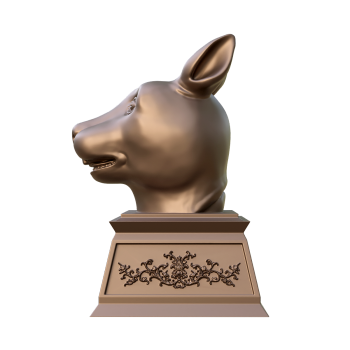
Bronze Statue of the Twelve Zodiac Beasts in Yuanmingyuan - Rabbit Head
Originally part of the fountain outside the Haiyan Hall of the Yuanmingyuan. The bronze statue of the rabbit's head represents the hour of Mao (from 5:00 to 7:00) and is one of the twelve zodiac bronze statues. It was designed by European missionary, Italian Lang Shining, supervised by French Jiang Youren, and produced by Qing court craftsmen. The copper statue with a rabbit head symbolizes agility and speed, symbolizing hope and joy. In 1860, the Anglo French coalition invaded China and set fire to the Yuanmingyuan, causing the loss of the rabbit head bronze statue overseas. On April 26, 2013, the French Pinault family announced that they would donate a rabbit head to the Chinese government without compensation. On June 28 of the same year, they officially donated a bronze statue of the rabbit head to China, which is currently housed in the National Museum of China.

Bronze Statue of the Twelve Zodiac Beasts' Heads in Yuanmingyuan - Rat Head
Originally part of the fountain outside the Haiyan Hall of the Yuanmingyuan in Beijing, it was designed by Italian missionary Lang Shining and made by craftsmen in the Qing court. Each animal capital has its unique symbolic significance. In 1860, when the British and French coalition burned down the Yuanmingyuan, it was stolen and lost overseas. The bronze statue of the rat's head represents the hour of Zi (23:00 to 1:00 the next day) and is one of the twelve zodiac bronze statues. It was auctioned at Christie's in France in 2009, but ultimately failed to sell. On April 26, 2013, the French Pinault family announced that they would donate rat and rabbit heads to China without compensation, and held a donation ceremony at the National Museum of China on June 28 of the same year.

The Double Phoenix Jade Pendant from the Zhou Dynasty
This jade pendant is from Tomb 60 of Liuli Ri in Hui County, Henan Province, and was buried together with the deceased. This light green jade piece is in the shape of two phoenixes, with a circular overall shape. The hollow carving imitates the shape and decoration of the work. The two sides of the pendant rotate upwards to form the head of a phoenix, while their circular bodies are connected to each other. A carved line surrounds the edge of the decoration, outlining the shape of a phoenix, while the entire piece is filled with curled cloud patterns. The pattern on the back of the pendant does not match its shape, indicating that the pendant was remade from an old piece of jade and is now housed in the National Museum of China.

Shang Siyang Bronze Square Zun
The Shang Siyang Bronze Square Zun is a bronze ritual vessel and sacrificial item from the late Shang Dynasty. Unearthed in 1938 on the mountainside of Zhuanerlun, Yueshanpu, Huangcai Town, Ningxiang County, Hunan Province (Tanheli Site), it is now collected in the National Museum of China. The Shang Siyang Bronze Square Zun is the largest existing bronze square Zun from the Shang Dynasty in China, with a side length of 52.4 centimeters, a height of 58.3 centimeters, and a weight of 34.5 kilograms. The entire object of the Shang Siyang Bronze Square Zun was cast using block casting method, which was seamless and exquisite, demonstrating superb casting skills. It is known as the "ultimate bronze model" in the field of history and is listed as one of the top ten national treasures passed down in China.

Bronze artifact from the Qin Dynasty, 'Qin Yangling Tiger Talisman'
The Qin Yangling Tiger Talisman, a bronze artifact of the Qin Dynasty, was a military talisman issued by Emperor Qin Shi Huang to the guards of Yangling. It is said to have been unearthed in Lincheng, Zaozhuang City, Shandong Province and is now housed in the National Museum of China. The Qin Yangling Tiger Talisman is 8.9 centimeters long, 2.1 centimeters wide, and 3.4 centimeters high, in the shape of a lying tiger, which can be divided into two parts. The left and right neck backs of the tiger each have the same 12 character engraved gold seal script: "The talisman of the armored soldiers is on the right side of the emperor and on the left side of Yangling." Due to its age, the mating area has rusted to death and cannot be separated.

Bronze ware from the Shang Dynasty, titled 'Fuhao Haozun'
This cultural relic is a bronze vessel called "Fuhao Haozun", which is one of the two owl shaped statues from the Shang Dynasty. This owl shaped statue was discovered in 1976 at the Fuhao Tomb in Anyang City, Henan Province, China. The owl shaped statue is divided into two parts: the detachable owl head and the hollow body of the bird. Animal shaped vessels are almost the only known bronze sculptures from the Shang Dynasty. This owl is one of the oldest and most naturalistic surviving owl shaped statues. Its form showcases the influence of Anyang, the capital of the Shang Dynasty, in the north, but the style and casting techniques of the vessels indicate that it is related to the bronze tradition of the Yangtze River region in southern and central China. The cultural relics are currently collected in the National Museum of China.

Popular Models
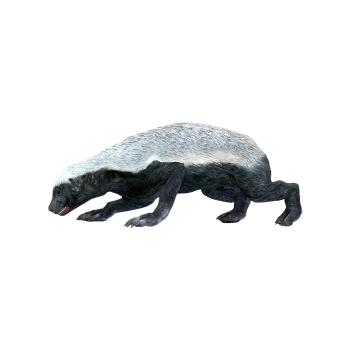
Honey Badger (3D animated model)
192 View
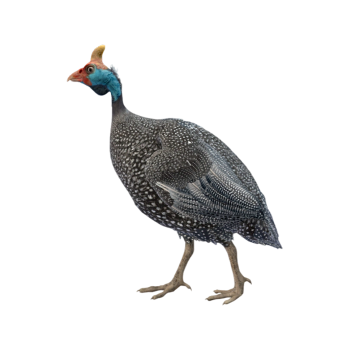
Guinea fowl (3D animated model)
163 View
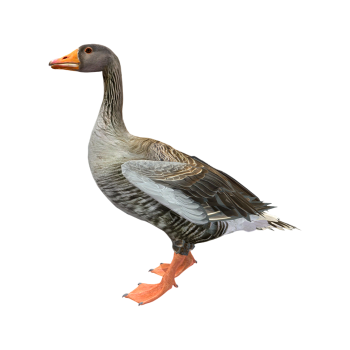
Wild Goose (3D animated model)
185 View
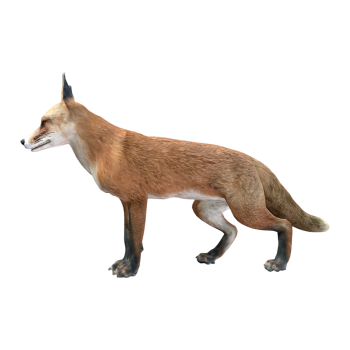
Red Fox (3D animated model)
153 View
Random Model

Plum
383 View

Indian Spice Rice Chicken Biryani
781 View

F1 2023 Mercedes W13
947 View


Russian Su-30 fighter
830 View
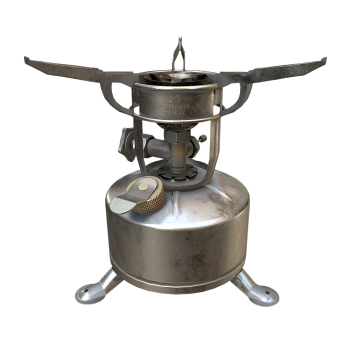
United States Army Field Furnace
374 View
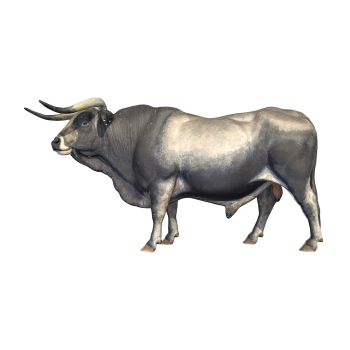

Vintage Wooden Radio
841 View


Japanese Sushi Boat
704 View